

Cigar Storage Mistakes to Avoid
Storing premium cigars is about protecting flavor, draw, and burn so every cigar smokes the way the blender intended. Cigars are hygroscopic, which means they readily absorb and release moisture from their surroundings; when humidity or temperature is off, they quickly lose essential oils, aroma, and structural integrity.
Avoiding a few common mistakes will protect your collection from mold, cracking, tight draws, or a hot, bitter burn. Think of your humidor as life support for your cigars: a stable micro-climate that keeps every cigar ready when you are, not when the environment decides.
Below are the most common cigar storage mistakes to avoid and how to fix them before they ruin your next smoke.
-
Not Seasoning the Humidor Properly
A brand-new or dry wooden humidor is like a thirsty Spanish cedar. If you load cigars into it without preparing the interior, the cedar will absorb moisture from the air and your cigars, dragging humidity down dramatically in the first days or weeks.
Before you store anything, you must season a humidor so the wood is already saturated and ready to maintain, not steal humidity. Modern guides recommend either:
- A dedicated seasoning kit or 84% relative humidity (RH) packs placed in an empty humidor for 3-7 days.
- A controlled method using distilled water on a sponge or seasoning wipes (never soaking the wood directly).
Skipping or rushing this step leads to rapidly dropping humidity, constant re-adjustments, and cigars that feel great one day and dry the next.
-
Storing Cigars at the Wrong Humidity
Few topics spark more debate than the best humidity for cigars, but in practice, a safe working range is roughly 65-72% RH, with many cigar enthusiasts aiming for about 65-70% at 65-70°F (18-21°C) for optimal flavor and burn.
- Too High (above ~72% RH): Cigars may swell, feel spongy, draw tight, and become susceptible to mold growth.
- Too Low (below ~62-63% RH): Cigars dry out, burn too hot and fast, and lose flavor as essential oils evaporate.
When you’re learning how to store cigars, think in terms of consistency rather than chasing one “magic number.” Pick a target (e.g., 67-69% RH) and keep it steady using quality humidification packs or a calibrated smart humidifier instead of constantly adjusting.
-
Using Tap Water in Humidifiers
Tap water contains minerals, chlorine, and other impurities. Over time, these can crystallize in foam or sponge-type humidifiers, cause white residue on cedar, clog devices, and increase the risk of mold.
For long-term, low-risk humidification:
- Use only distilled water or manufacturer-recommended solutions.
- Consider humidity packs that maintain RH within about ±2% and do not require constant refilling.
This single change eliminates one of the most preventable sources of contamination inside a humidor.
-
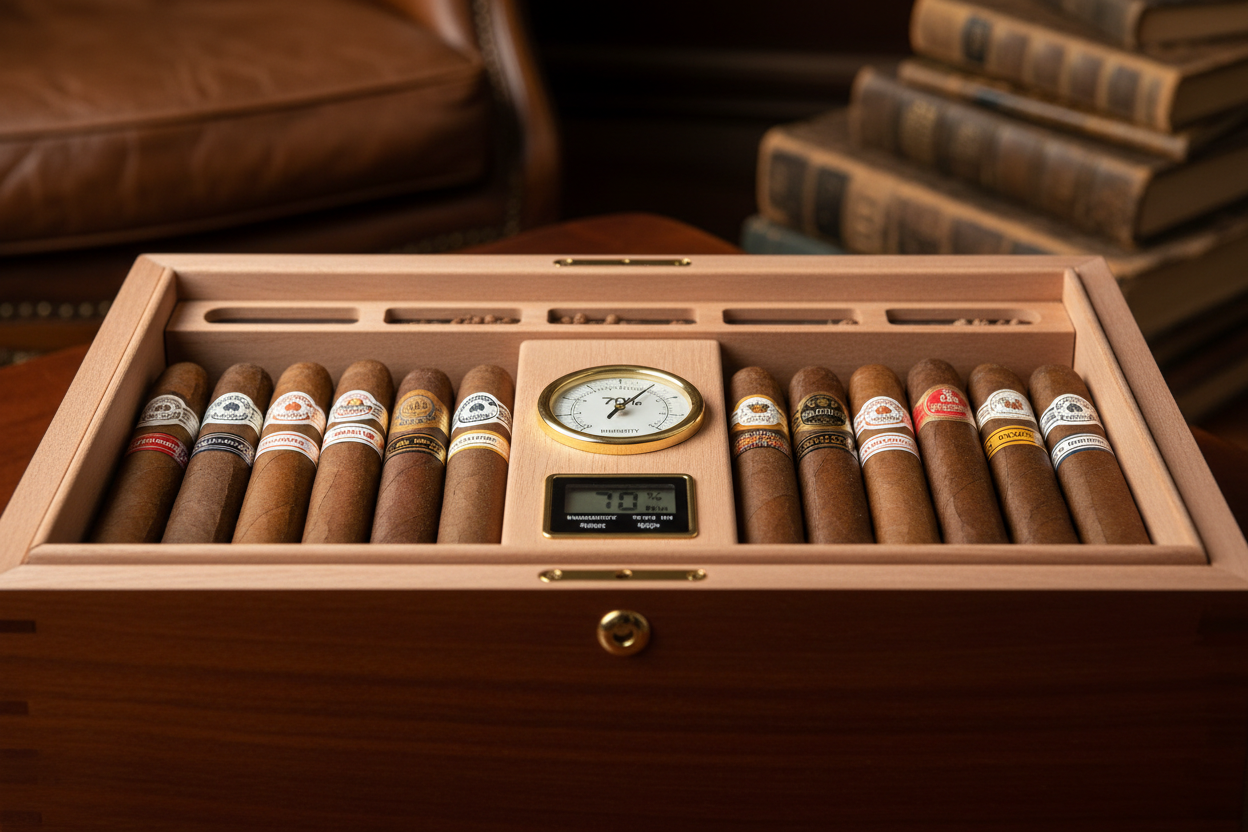
Ignoring Hygrometer Accuracy
A humidor is only as good as your data. If your hygrometer is off by 5-10%, you might think you’ve dialed in perfect conditions while your cigars are quietly drying out or sitting in a mold-friendly swamp.
Digital hygrometers are generally more accurate than inexpensive analog models, and most can be calibrated using a salt test or calibration kit to verify readings.
Regular calibration, at least a few times a year, is among the most underrated cigar storage tips. A precise, calibrated hygrometer (or a connected smart sensor) turns guesswork into measurable control.
-
Overfilling the Humidor
It’s tempting to pack every inch of space with cigars, but cramped boxes restrict airflow and create microclimates. The result? Cigars on one side may be perfectly conditioned, while others run too dry or too wet.
Here’s what you should aim for:
- Keep some breathing room between rows and layers.
- Avoid pressing cigars tightly against the humidification device.
- Rotate cigars occasionally in traditional, non-circulated humidors.
Think of your humidor as climate-controlled shelving, not a vacuum-sealed storage bin.
-
Opening the Humidor Too Often
Every time you open the lid, you vent humidity and invite ambient air inside. Opening a humidor every few hours “just to check” forces the system to constantly recover, and in drier environments, it may never fully stabilize.
Here’s a better approach instead:
- Check no more than once a day (or less).
- Rely on an external or app-connected sensor so you don’t have to open the lid to read the hygrometer.
- Make adjustments gradually and give the humidor time to respond.
Smart humidifiers that send real-time alerts when humidity drifts save you from compulsive checking and keep the environment stable with minimal interaction.
-
Placing the Humidor in the Wrong Environment
Even a well-built humidor will struggle if it sits on a radiator, under direct sun, or in the blast of an AC vent. Sudden temperature swings stress the wood, disrupt humidity, and can encourage tobacco beetles if temperatures climb above ~75°F (24°C).
Do these steps for stable performance:
- Keep the humidor away from windows, radiators, heaters, and HVAC vents.
- Aim for a room temperature around 65-72°F (18-22°C).
- Avoid garages, attics, or places with large daily temperature swings.
Good placement is free and often more impactful than expensive upgrades.
-
Mixing Flavored and Non-Flavored Cigars
Cigars are highly absorbent. Aromas from infused or flavored cigars easily migrate to traditional, non-flavored sticks when they share the same space for weeks or months.
To preserve blends as intended:
- Never store flavored and non-flavored cigars in the same primary humidor.
- Use a separate box or a dedicated case for flavored sticks.
- If needed, a small, well-maintained travel case is a simple way to keep infused cigars isolated.
This separation protects the investment you’ve made in premium, long-filler cigars.
-
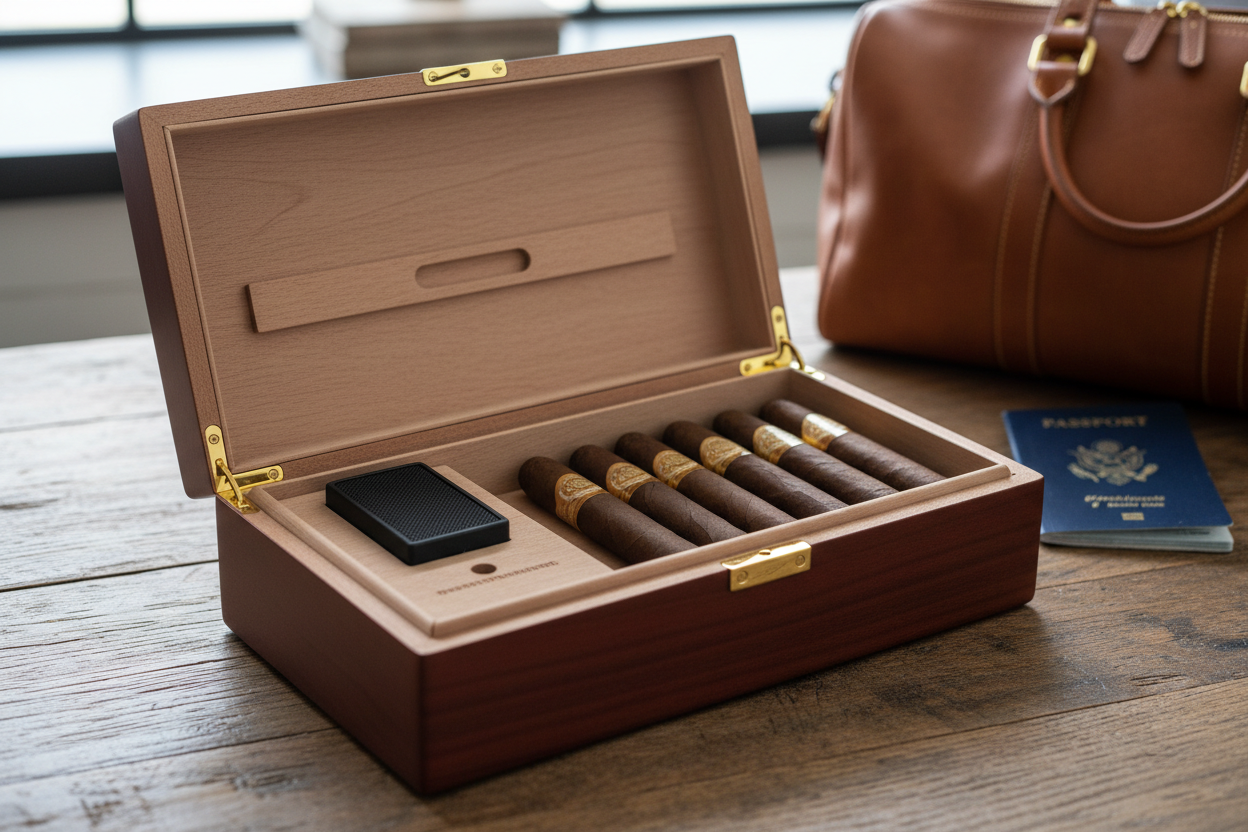
Not Maintaining Travel Humidors Correctly
A travel case is not a cigar “wallet” but a mini-humidor that also needs proper care. Neglecting travel humidor care can undo months of perfect storage in a weekend.
Common issues include:
- Tossing cigars into an unconditioned travel case that has bone-dry foam or cedar.
- Leaving the case in a hot car, on a beach chair, or in intense sun, which rapidly dries out cigars or overheats them.
Before travel:
- Pre-condition the travel humidor with a humidity pack or distilled water element.
- Load cigars only once it’s stable.
- Keep the case in your carry-on or bag, away from temperature extremes.
Done well, a travel humidor acts as a stable, cushioned environment instead of a fancy cigar box on the go.
-
Ignoring Signs of Over-Humidification or Under-Humidification
Your cigars constantly give feedback if you know what to look for:
- Over-Humidified Cigars: These feel spongy, may have a tight or labored draw, and can burn unevenly or go out often. In severe cases, you may see fuzzy mold spots on the wrapper or foot.
- Under-Humidified Cigars: These feel brittle, develop cracked wrappers or unraveling caps, and burn too hot or too fast with harsh, thin smoke.
It’s also important to distinguish mold from natural “plume” (crystallized oils); plume appears as very fine, even, dust-like crystals, while mold looks fuzzy and irregular. When in doubt, treat suspicious growth as mold and isolate the cigar immediately.
If you’re serious about how to store cigars correctly, part of your routine should be a quick visual inspection and gentle squeeze test each time you select a cigar. Combine that with a reliable hygrometer and consistent RH, and you drastically reduce the risk of storage surprises.
Prevention Beats Restoration Every Time
Good cigars don’t come cheap, and they don’t come back once they’ve been ruined by poor storage. The core principles are straightforward: season your humidor properly, maintain the best humidity for cigars in a consistent range, avoid tap water, verify your hygrometer, and protect your setup from temperature extremes and contamination.
Prevention is far easier (and less expensive) than trying to rescue dried-out or over-humidified cigars. The right cigar storage tips, combined with modern tools, like smart humidifiers that provide precise, app-connected control and real-time alerts, give you peace of mind that your collection is protected even when you’re not checking it.
If you monitor humidity and temperature regularly, maintain both your main humidor and travel cases, and respond early to any warning signs, every cigar you pull from the box will be ready to deliver the experience you paid for.
Frequently Asked Questions (FAQs)
1. What humidity level should cigars be stored at?
Most premium cigars should be stored around 65-72% relative humidity, with many aficionados targeting the 65-70% range for an ideal balance of flavor, burn, and construction stability.
2. How do I know if my humidor is properly seasoned?
A humidor is properly seasoned when it can hold your target RH (for example, 68-70%) consistently for several days before adding cigars, with no rapid drops even when you briefly open the lid.
3. Can cigars recover after being too dry?
Slightly dry cigars can often be slowly reconditioned by returning them to a stable humidor and letting them rest for several weeks, but cigars that are extremely brittle or cracked may never fully regain their original flavor and structure.
4. Why do cigars get mold inside a humidor?
Mold usually appears when humidity is kept too high for too long (often above 72% RH), especially when combined with warm temperatures, poor airflow, or tap water in the humidification system.
5. How often should I check my humidor’s humidity?
If you’re using a calibrated digital hygrometer or smart sensor, checking once every few days (or even weekly) is usually enough; constant opening and “just checking” can actually destabilize humidity.
6. Should I store flavored cigars separately?
Yes. Flavored or infused cigars should be stored in a separate humidor or travel humidor care setup, because their strong aromas can easily migrate and permanently alter the taste of non-flavored cigars.