

Optimal Humidity for Cigars: The Complete Storage Guide
Humidity control is the difference between a cigar that burns evenly with a clean draw and one that tastes muted, tunnels, or cracks before you even cut it. When you dial in the best humidity for cigars, you’re protecting three things at once: burn performance, flavor expression, and long-term aging potential. Get it wrong, and you risk dried wrappers, tight draws, or mold that can ruin an entire box.
This guide breaks down the ideal relative humidity (RH) range, what actually changes when humidity shifts, and how to store cigars so they stay stable, whether you’re aging a collection at home or traveling.
What Is the Best Humidity for Cigars?
Most cigar smokers aim for 65%-72% relative humidity (RH), with 69%-70% RH as the “sweet spot” for everyday storage. That range consistently supports a smooth burn, intact wrappers, and balanced flavor without pushing cigars into the “too wet” zone where draw issues and mold become more likely.
Here’s why 69%-70% RH is so popular:
- More Predictable Combustion: Cigars at mid-range RH tend to light easier, burn straighter, and require fewer touch-ups.
- Better Flavor Clarity: Over-humidified cigars can taste “diluted” or dull because excess moisture interferes with combustion and aroma release.
- Lower Risk of Storage Problems: Pushing beyond 72% RH increases the likelihood of mold and pest issues, especially if the temperature rises.
Treat 69%-70% RH as your baseline, then adjust slightly based on your climate, humidor type, and smoking preferences.
Why Humidity Matters for Cigar Preservation
Humidity isn’t just about keeping cigars from drying out. It directly impacts how tobacco burns and how well the wrapper stays intact over time; two variables that control your smoking experience and your inventory’s value.
If the Humidity is Too Low:
When RH drops too far below the target range, cigars can:
- Dry out and burn too fast
- Crack at the wrapper or cap
- Lose aromatic oils faster, reducing flavor depth
If the Humidity is Too High:
When RH stays high for too long, cigars may:
- Swell and develop a tight draw (hard to pull smoke through)
- Burn unevenly or go out frequently
- Become more vulnerable to mold, especially if the environment is warm
This is where practical cigar storage tips matter most: your goal is not perfection, it’s stability in a safe range.
Factors That Influence Optimal Humidity
The ideal RH target is only half the equation. The other half is what pushes your humidor off target in the real world.
Humidor Size and Material
- Spanish cedar humidors buffer humidity changes well (they “absorb and release” moisture gradually).
- Plastic “tupperdors” and travel cases often hold RH tightly, but can spike faster if over-packed with humidity sources.
Climate and Room Environment
If you live in a dry climate or run heating often, your humidor will lose moisture faster. Conversely, humid summers can make high RH creep up unless you control it.
How Often You Open the Humidor
Every open-and-close cycle exchanges air. Frequent opening creates micro-swings that show up as inconsistent readings.
Seasonal Fluctuations
Indoor HVAC changes the game:
- Winter heating dries the air
-
Summer humidity raises ambient moisture
Plan to adjust your humidification method by season rather than forcing one “set and forget” approach year-round.
How to Store Cigars at the Proper Humidity
Before you choose devices, focus on the system: a stable humidor, a trustworthy reading, and a controlled environment. The steps below are the most reliable way to store cigars without guesswork.
Use a Properly Seasoned Humidor
A new or dried-out cedar humidor will absorb moisture aggressively, making RH unstable until the wood is conditioned. That’s why you season a humidor before you store cigars long-term.
A common professional approach is using a dedicated seasoning method (often with humidity packs designed for that purpose) to bring the cedar to equilibrium before adding your collection.
Install Reliable Humidity Control Devices
Your humidification option should match your storage style:
- Two-Way Humidity Packs (e.g., Set RH Packs): Extremely consistent, low-maintenance, and ideal for most desktop humidors.
- Gel or Beads: Effective, but require more monitoring and can overshoot if overfilled.
- Electronic Humidifiers: Best for larger cabinets or serious aging setups, especially when paired with accurate sensors and consistent refilling habits.
The bigger your storage (and the more valuable your inventory), the more you benefit from automation and redundancy.
Use an Accurate Hygrometer
If your reading is wrong, everything downstream is wrong.
- Digital hygrometers are typically easier to trust and quicker to read.
- Placement matters, so put the sensor where your cigars actually sit, not right beside the humidification element or against the lid.
Even strong humidification tools can’t compensate for a misreading device.
Maintain Stable Conditions
Humidity and temperature work together. Even if your RH is “right,” heat can accelerate issues. To keep storing cigars practically and safely:
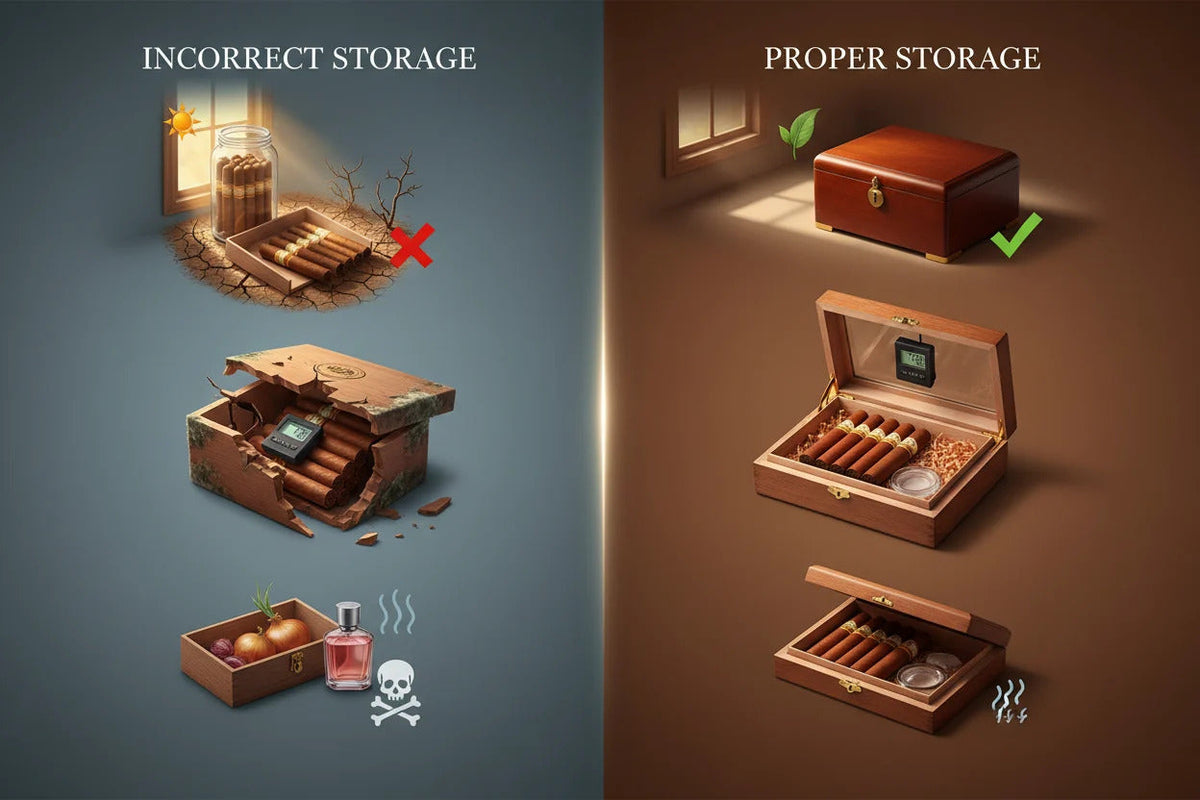
- Avoid direct sunlight and heat sources
- Keep humidors away from vents, radiators, and electronics that produce heat
- Aim for a steady room environment rather than chasing RH daily
Cigar Storage Tips for Long-Term Aging
Aging is where consistency becomes a competitive advantage. When you’re not just holding cigars but developing flavor, small choices compound.
So, when can slightly higher humidity help? Some smokers prefer 70%-72% RH for slower, gentler aging, especially if the storage temperature is cooler and stable. That said, higher RH narrows your safety margin. If the temperature rises, you’ve created the conditions where mold and pests become more plausible.
Rotate for balanced aging. If you’re aging multiple boxes:
- Rotate positions every few months (top/bottom, front/back)
- Avoid “dead zones” in large humidors where airflow is limited
Monitor temperature alongside RH. A classic guideline many enthusiasts reference is the “70/70” concept (about 70°F and ~70% RH), but the more modern, risk-aware approach is: stay stable and avoid running too warm, because warmer conditions can invite storage problems.
Travel Humidor Humidity Guidelines
For travel humidor care, your objective is simpler: protect cigars from rapid swings and extreme temperatures.
- Pre-Condition Before Trips: If your travel humidor has cedar or is new/dry, treat it like a main humidor: condition it before loading cigars. That reduces swings during transit.
- Use Humidity Packs for Portability: Humidity packs are often the most travel-proof option because they’re stable, compact, and don’t spill.
- Avoid Hot Cars and Freezing Luggage Zones: Cars, trunks, and unheated cargo areas can push temperatures into dangerous extremes. If heat combines with high RH, you can also raise the risk of tobacco beetle activity; one well-known industry warning is that beetle larvae can hatch when temperature and humidity climb above the low 70s.
Signs Your Humidity Levels Are Wrong
Your cigars will tell you the truth, often before your hygrometer does.
Over-Humidified Cigars:
- Feel slightly squishy
- Tight draw (restricted airflow)
- Frequent relights or uneven combustion
Under-Humidified Cigars:
- Flaky wrapper
- Cracking at the cap
- Hot, fast burn with sharper flavors
Mold vs. Plume:
This is one of the most common misdiagnoses in storage:
- Mold tends to look fuzzy, can spread, and often smells musty.
- Plume (or bloom) is commonly described as a lighter, crystallized-looking film that brushes off more easily and is often discussed as a byproduct of aging.
If you’re unsure, isolate the cigar immediately, because if it’s mold, it can spread.
Keep Humidity Stable, and Everything Else Gets Easier
The best humidity for cigars sits in a practical, proven band, 65% to 72% RH, with around 69%-70% RH as the most reliable “daily driver” target for burn, flavor, and storage safety.
Once your humidor is seasoned, your hygrometer is trustworthy, and your environment is steady, storing cigars becomes straightforward: reduce swings, avoid heat, and check your system consistently rather than obsessively.
Frequently Asked Questions (FAQs)
1. What is the ideal humidity level for cigars?
Most cigar storage performs best between 65% and 72% RH, with many smokers preferring around 69%-70% RH for consistent burn and flavor.
2. Can cigars be stored at low humidity temporarily?
Yes, short periods at slightly lower RH are usually manageable, but extended dryness can crack wrappers and flatten flavor as oils dissipate.
3. What happens if the humidity is too high in the humidor?
Cigars can swell, develop tight draws, burn poorly, and face a higher risk of mold, especially when RH rises above the low 70s for sustained periods.
4. Do different cigar types require different humidity levels?
Preferences vary: some blends smoke better slightly drier (cleaner burn), while others tolerate slightly higher RH for slower aging, but staying within the standard range is the safest approach.
5. How often should a humidor be checked for humidity stability?
Check more frequently when your humidor is new, recently adjusted, or during seasonal changes; once stable, consistent spot-checking is usually sufficient.
6. Do travel humidors maintain humidity differently than wooden humidors?
Yes, travel cases often seal more tightly, which can reduce gradual moisture loss but also makes it easier to overshoot if you add too much humidification. Humidity packs are typically the simplest solution for travel humidor care.