
How Dry is Too Dry? Recovering Over-Dried Cigars
You open the humidor, reach for a cigar you have been saving, and immediately know something is wrong.
The wrapper feels unusually firm. There is little give beneath your fingers. Perhaps you even hear a faint crackle as you handle it.
A dry cigar does not necessarily mean a lost cigar. You can recover many over-dried cigars, but how you restore moisture matters. Tobacco loses and absorbs moisture gradually, so trying to correct months of dryness in a day can cause more damage than the original humidity problem.
If you are wondering how to rehydrate dry cigars, patience is the first rule. Before adding moisture, determine how far the cigar has dried, correct the environment that caused it, and then allow the tobacco to recover slowly.
How Dry is Too Dry for Cigars?
There is no single RH reading that tells you a cigar is permanently damaged.
For everyday storage, a range of approximately 65–70% RH is widely used, although cigar preferences and storage strategies vary. CHAAC's guide to optimal humidity for cigars looks more closely at the typical 65–72% RH range and how different settings affect storage.
What matters during dry cigar recovery is not only the current number but also how low the humidity became and how long the cigars remained there.
A brief drop in RH is very different from discovering that a humidor has been sitting extremely dry for months.
Look at the cigars themselves.
Signs a cigar may be too dry
A dry cigar may:
-
Feel unusually hard or rigid
-
Have very little give when gently pressed
-
Produce a faint crackling sound when handled
-
Develop a brittle or fragile wrapper
-
Show small cracks or flaking
-
Burn unusually quickly
-
Produce a hotter, harsher, or less balanced smoking experience
Handle a suspected dry cigar carefully. An already brittle wrapper can crack simply from excessive pressure during inspection.
If your humidor reading appears normal but several cigars feel unusually dry, do not automatically add more moisture. Check your sensor accuracy, placement, seal, temperature, and airflow first. Our guide to common cigar storage mistakes can help you identify the underlying issue.
Can You Rehydrate a Dry Cigar?

Often, yes.
If the wrapper remains reasonably intact and the tobacco has not become extremely brittle, there is a good chance that gradual cigar rehydration can improve its condition.
The more severely a cigar has dried, however, the less predictable the result becomes.
A wrapper that is already crumbling or flaking extensively may indicate that the cigar has passed the point where meaningful recovery is likely. And even when a cigar physically recovers, you should not assume it will return perfectly to its previous condition. Extended drying may affect the oils and aromatic qualities that contribute to its original character.
Think of recovery as preservation rather than reversal.
You are giving the cigar the best possible environment to regain moisture gradually. You are not turning back time.
Why You Should Never Rehydrate Cigars Too Quickly
This is the most important part of learning how to restore dry cigars.
Do not take severely dry cigars and immediately expose them to extremely high humidity.
A dry cigar's wrapper, binder, and filler have all lost moisture. When humidity rises sharply, the outer tobacco can absorb moisture and expand before the interior has had enough time to adjust. That difference can put stress on the cigar's construction and crack the wrapper.
More humidity is therefore not the same as faster recovery.
The better approach is:
Low and controlled → stable → gradually higher → normal storage
This principle is also why stable relative humidity matters for premium cigars even when there is no recovery underway. Tobacco continually responds to its environment, and large repeated changes are rarely desirable.
How to Rehydrate Dry Cigars Step by Step
The exact recovery period depends on how dry the cigars became, how long they remained dry, and their construction. There is no responsible "three-day fix" for every cigar.
Instead, use condition and stability as your guide.
1. Check the humidor before adding humidity
Before beginning recovery, check the current RH and make sure the storage environment is capable of holding stable conditions. If the humidor itself is still losing moisture, returning recovering cigars to it will only continue the problem.
If only part of the collection is affected, compare cigars from different areas of the humidor. Differences between shelves or corners may point to uneven conditions rather than a problem affecting the entire collection.
2. Separate severely dry cigars if necessary
If most of your collection is properly conditioned but a handful of cigars are extremely dry, consider recovering those cigars separately rather than changing the environment for your entire collection.
A clean, airtight container with controlled humidification can create a more manageable recovery environment.
This also prevents you from pushing healthy cigars to an unnecessarily high RH while trying to save the dry ones.
3. Begin at a moderate humidity level
Do not immediately jump to 70%, 72%, or higher simply because the cigars are dry.
For substantially dried cigars, experienced cigar-care guidance commonly recommends beginning around the low 60s RH and increasing humidity gradually. The precise starting point is less important than the principle: avoid a dramatic moisture increase.
4. Give the cigars time
This is where most attempts to revive dry cigars go wrong.
You may see the RH reading improve quickly. That does not mean the cigar has recovered just as quickly.
Moisture needs time to move through the wrapper, binder, and filler. Smoking a recovering cigar too soon can mean the outer tobacco has regained moisture while the filler remains comparatively dry, potentially contributing to uneven combustion or tunnelling.
For moderately dry cigars, think in terms of weeks rather than hours. Severely dried cigars may require considerably longer.
5. Increase RH gradually
Once the cigars have remained stable at the initial level, begin moving toward your normal storage target in small stages.
For example:
62% → 65% → 69% RH
This is an example of a conservative recovery progression, not a mandatory schedule for every cigar. The condition of the cigars should determine how quickly you move.
CHAAC's guide to which humidity level is best explains the practical differences between 65%, 69%, and 72% RH. For most collections, approximately 69% provides a useful all-around starting point, while individual preferences and storage environments vary.
Avoid the temptation to speed things up by selecting an excessively high RH.
6. Check the cigars, not only the hygrometer
A hygrometer tells you about the environment. The cigar tells you how recovery is progressing.
Periodically and gently inspect one.
You are looking for a gradual return of flexibility. The cigar should no longer feel brittle or produce a crackling sensation under very light pressure.
Do not repeatedly squeeze valuable cigars to test them. A fragile wrapper can be damaged by the inspection itself.
7. Let the cigar stabilize before smoking it
Once the cigars reach your preferred storage range, give them additional time to stabilize.
This final rest matters because moisture may not yet be evenly distributed throughout the cigar.
When you eventually smoke one, evaluate:
- Draw
- Burn rate
- Burn line
- Wrapper condition
- Aroma
- Flavor balance
One recovered cigar can also tell you a great deal about whether the rest of the affected collection needs more time.
What If the Humidor Itself Has Dried Out?
Recovering the cigars is only half the job if a wooden humidor has also lost significant moisture.
An extremely dry wooden humidor can absorb moisture from its environment, making it difficult to maintain stable RH. In that situation, the humidor may need to be reconditioned or re-seasoned before the collection is returned.
Follow the humidor manufacturer’s recommended seasoning procedure and avoid trying to speed up the process with excessive moisture. Once reconditioned, allow the empty humidor to reach and consistently maintain your target RH before returning the cigars.
If you are also reconsidering how you maintain humidity, our guide to automatic vs. manual cigar humidifiers explains the differences between hands-on and automated humidity management.
Why Did My Cigars Dry Out in the First Place?
Dry cigars are usually a symptom of a storage problem.
A depleted humidification source is an obvious cause, but not the only one.
A poor humidor seal can continually exchange conditioned air with a dry room. Winter heating can dramatically reduce indoor humidity. Frequent opening creates repeated environmental changes. An incorrectly placed or inaccurate hygrometer can also convince you that conditions are fine when another part of the humidor is considerably drier.
Temperature deserves attention as well. As our guide to how temperature affects cigar aging and flavor explains, temperature and RH should be considered together rather than as completely separate measurements.
And in larger humidors, air distribution matters. A single reading may not represent conditions on every shelf or in every corner.
The goal is not merely to get the hygrometer back to the right number. It is to understand why it left that range in the first place.
How to Keep Your Cigars From Drying Out Again
Once the collection has recovered, the priority is keeping its environment stable.
Choose an appropriate humidor, maintain a reliable seal, use distilled water where your humidification system requires it, monitor temperature and RH, and avoid making large adjustments in response to every temporary fluctuation.
Most importantly, look for trends.
A humidor briefly moving a few percentage points after you open it is not the same as RH declining steadily for a week.
That distinction matters because constant intervention can create the very instability you are trying to prevent.
A Smarter Way to Protect Against Unexpected Dryness
The most damaging humidity problems are often the ones that go unnoticed.
Perhaps you are travelling. Perhaps the humidor is in a room you do not visit every day. Or perhaps the water level simply falls lower than expected.
That is where active monitoring becomes useful.
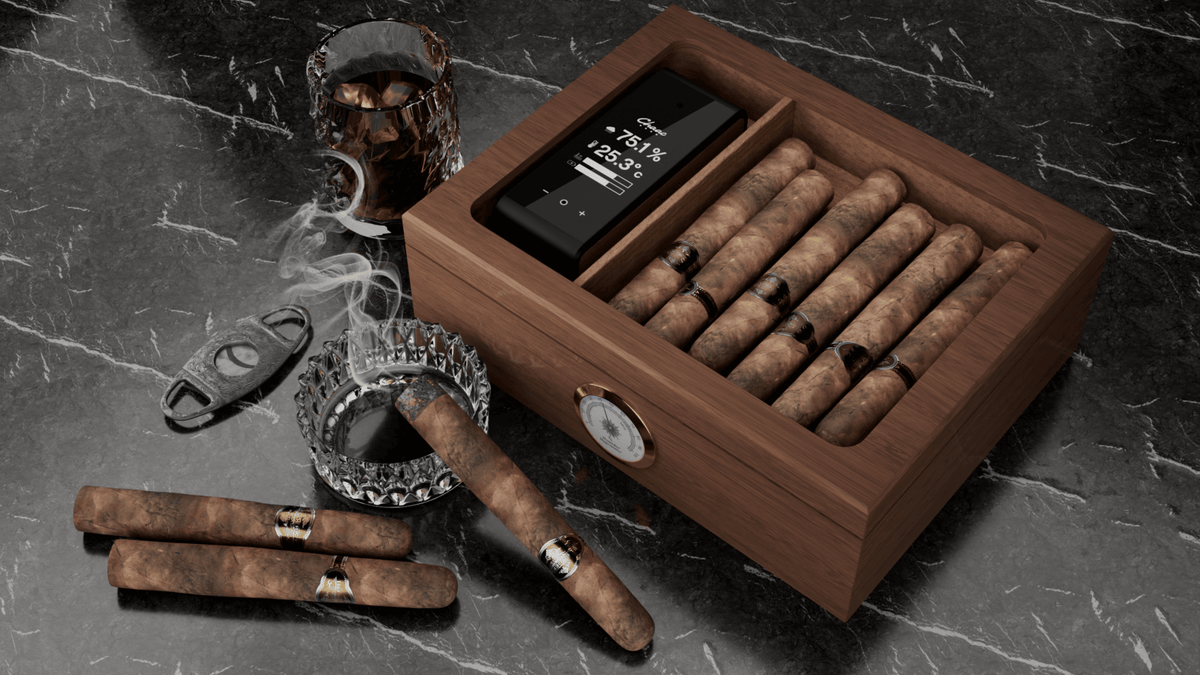
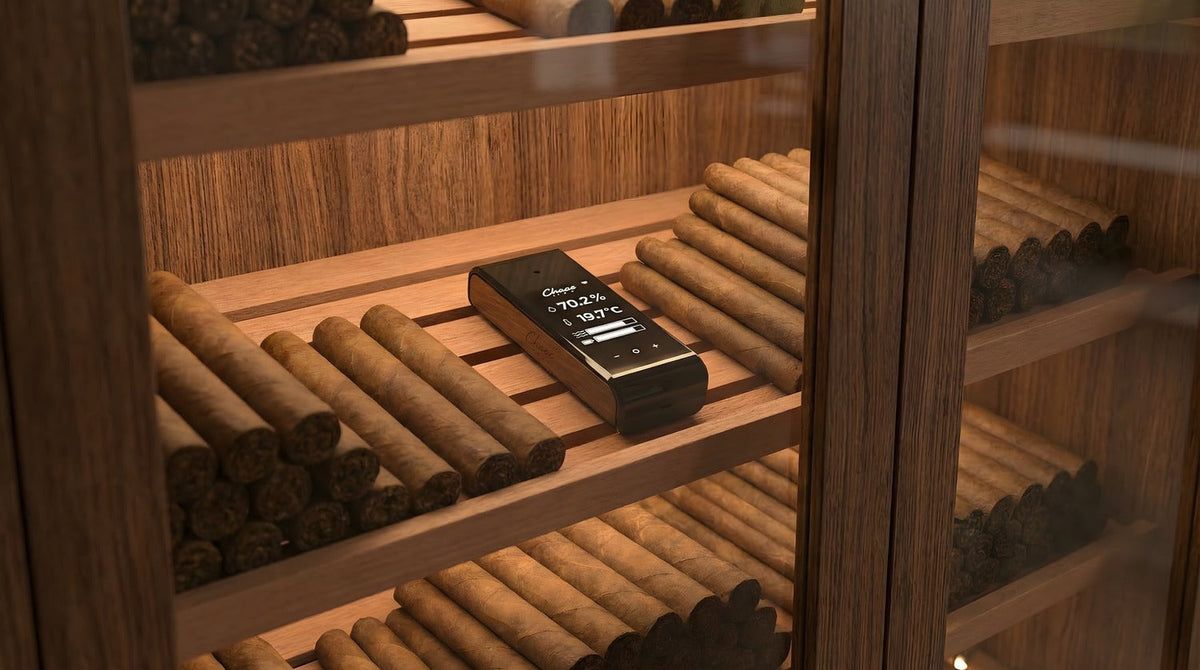
CHAAC is designed as a complete humidification system rather than simply a humidity sensor. Its sensors monitor conditions while the system actively regulates moisture based on the selected humidity setting. The system is also rechargeable and refillable, reducing dependence on frequently replaced humidification products.
Collectors looking for automated humidity management can explore CHAAC cigar humidifiers.
CHAAC Patuca cigar humidifiers provide automated humidity regulation with on-device monitoring and audible humidity, water, and battery alerts.
For collectors who want greater visibility, CHAAC Grande cigar humidifiers add connected monitoring and control, including access to humidity, temperature, battery status, and water-level information.
That approach reflects what CHAAC is built to provide: not simply another reading to check, but greater control over the environment inside an existing humidor.
Recovery Rewards Patience
Recovering over-dried cigars is ultimately about restoring balance gradually. Raise humidity carefully, give the tobacco enough time to adjust, and address whatever caused the humidor to become too dry in the first place.
The best dry cigar recovery strategy is ultimately the one you rarely need to use: a stable environment that keeps your collection properly conditioned in the first place.
Frequently Asked Questions
1. Can completely dry cigars be restored?
Sometimes, but recovery depends on severity. A firm, dry cigar with an intact wrapper has a better chance than one whose wrapper is already crumbling or extensively flaking. Even after successful rehydration, a severely dried cigar may not recover all of its original aromatic and flavor characteristics.
2. How long does it take to rehydrate dry cigars?
It depends on how dry they are and how long they have been in that condition. Mild dryness may improve over days or weeks, while severely dried cigars can require several weeks or even months. The process should not be rushed.
3. What humidity should I use to rehydrate cigars?
For significantly dry cigars, begin conservatively rather than placing them immediately into very high humidity. A staged process beginning around the low 60s RH and gradually progressing toward the desired storage setting is commonly recommended.
4. How do I know when a dry cigar has recovered?
A recovered cigar should regain some flexibility and should not crackle or feel brittle under very gentle pressure. After reaching the desired RH, allow additional resting time so moisture can distribute through the wrapper, binder, and filler before smoking.
5. Can you rehydrate a cigar more than once?
Technically, a cigar can regain moisture after more than one dry period, but repeated drying and rehydration is not good storage practice. Repeated environmental swings place stress on the wrapper and can compromise the cigar's long-term condition. Stable storage is preferable to repeated recovery.