
Why Relative Humidity (RH) Matters for Premium Cigars
A premium cigar is a carefully balanced blend of natural tobacco leaves. Its wrapper, binder, and filler continue responding to the surrounding environment long after the cigar leaves the rolling table. Without stable storage conditions, the texture, aroma, draw, combustion, and flavor experience can all change.
Relative humidity (RH), is one of the most important factors in preserving that balance. Too little moisture can leave a cigar dry, fragile, and harsh. Too much can make it swollen, difficult to draw, and vulnerable to storage problems.
Understanding why relative humidity matters for cigars allows you to protect each cigar as it was intended to be enjoyed. It also replaces constant guesswork with a more precise approach to collection management.
What Does Relative Humidity Mean?
Relative humidity measures how much moisture is present in the air compared with the maximum amount that the air could hold at the same temperature. It is expressed as a percentage.
For example, 69% RH does not mean that 69% of the air is water. It means the air contains 69% of the moisture it could hold under those specific temperature conditions.
This distinction matters because warm and cool air do not hold moisture in the same way. A humidor may therefore display a different RH reading after a significant temperature change, even when no water has been added or removed.
The commonly recommended storage range for premium cigars is approximately 65% to 70% RH. Within that range, the tobacco can retain its flexibility and character without becoming excessively moist. Stable temperature is also important because changes in temperature affect relative humidity.
A detailed cigar humidity guide can help you understand the available settings, but consistency matters more than reacting to every small movement on the hygrometer.
Why Is Humidification Important for Cigars?
The answer to why humidification is important for cigars begins with the tobacco leaf itself. Tobacco is hygroscopic, meaning it exchanges moisture with the air around it. When the environment becomes dry, the cigar releases moisture. When the surrounding air is humid, it absorbs moisture.
This exchange affects several parts of the smoking experience.
1. It Protects the Wrapper
The wrapper is the most visually prominent and delicate part of a cigar. When it loses too much moisture, it may become brittle and more likely to crack during cutting, lighting, or handling.
Proper humidity in a humidor helps the wrapper remain flexible without making it soft or swollen. This is especially important for cigars with thin or delicate wrappers.
2. It Supports an Even Draw
Moisture affects how tightly the tobacco leaves sit together. A cigar that absorbs too much moisture may expand internally, creating resistance and restricting airflow.
An excessively dry cigar may draw easily but burn too quickly. Maintaining the correct humidity for humidor storage supports a balanced draw that does not feel blocked or unusually loose.
3. It Influences Combustion
A properly conditioned cigar should light evenly and remain lit without constant attention. Excess moisture can make combustion sluggish, leading to repeated relights, tunneling, or an uneven burn line.
Insufficient moisture may cause the cigar to burn hot and fast. That additional heat can overpower subtle flavor characteristics and create a sharper experience.
Understanding the signs of cigar over-humidification makes it easier to recognize when soft texture, tight airflow, or repeated relights are connected to excess moisture.
What Is the Ideal Humidity for a Humidor?
There is no single number that suits every cigar, smoker, humidor, and climate. However, the accepted range for premium cigar storage generally falls between 65% and 70% RH, with many collections performing well near the middle of that range.
The ideal humidity for humidor storage depends on several factors:
- The cigars and wrapper types in your collection
- Whether you prefer a firmer or softer cigar
- Your local climate and seasonal conditions
- The quality and seal of your humidor
- How often you access the collection
- Whether the cigars are stored for regular use or long-term aging
A lower setting, such as 65% RH, may support a firmer feel, more open draw, and cleaner combustion. A setting around 68% to 69% RH provides a balanced starting point for many collections. Higher settings may produce a softer cigar but leave less room for upward fluctuations.
Our guide to which humidity level is best explores the practical differences between common RH settings in more detail. The most dependable ideal humidor humidity is ultimately the level that remains stable and produces the draw, burn, and texture you prefer.
How Incorrect Humidity Affects Premium Cigars
Humidity problems rarely appear in only one form. Changes in texture, aroma, appearance, and combustion often occur together.
When Cigars Become Too Dry
A dry cigar may develop:
- A brittle or cracked wrapper
- A faster-than-normal burn
- A hot or sharp smoking experience
- Reduced aroma
- A loose feel when gently handled
Severe dryness can cause lasting damage. When moisture has been lost over an extended period, some of the cigar’s original aromatic character may not return completely.
The process of recovering over-dried cigars should therefore be gradual. Raising the RH too quickly may cause the outer leaves to absorb moisture faster than the interior, increasing the risk of splitting.
When Cigars Become Too Humid
An over-humidified cigar may feel soft or spongy. It may also resist airflow, burn unevenly, or require frequent relighting.
Prolonged excessive moisture can create an environment more favorable to mold and other storage concerns. Official cigar-storage guidance warns that cigars kept too wet may not smoke correctly, while prolonged wetness can damage the tobacco.
Many common cigar storage mistakes begin with trying to correct a reading too aggressively. Adding unnecessary water, combining conflicting humidification methods, or repeatedly changing the target can produce wider fluctuations instead of greater control.
Temperature and Humidity Must Work Together
Relative humidity cannot be managed in isolation. Because RH changes with temperature, a stable hygrometer reading is only meaningful when the humidor’s temperature is also controlled.
Exploring how temperature affects cigar aging and flavor can explain why warm storage can create different risks than cool, stable storage.
Keep your humidor away from:
- Direct sunlight
- Heating vents and radiators
- Air-conditioning outlets
- Exterior walls with major temperature swings
- Appliances that generate heat
Seasonal conditions also matter. Indoor heating may dry the surrounding air during winter, while humid summer weather may reduce how much moisture the humidifier needs to release.
Knowing how weather changes affect cigar humidor performance helps you respond to longer-term trends instead of overcorrecting temporary fluctuations.
Humidor Design and Airflow Affect RH Stability
Even an advanced humidification system cannot fully compensate for a poorly sealed or incorrectly sized humidor.
Before selecting a humidifier, consider how to choose the right cigar humidor for the size of your collection. A well-built humidor should limit uncontrolled air exchange while still providing enough interior space for effective circulation.
Overfilling the humidor can create isolated microclimates. Cigars near the moisture source may experience different conditions from those behind tightly packed boxes or on another shelf.
This is why air circulation improves cigar preservation. Moving conditioned air through the humidor helps reduce damp corners, dry zones, and uneven sensor readings. In larger cabinets, active air circulation becomes especially valuable because shelves and boxes can interrupt natural airflow.
Choosing a Humidification System
The right system depends on the size of the humidor, the value of the collection, and how much manual maintenance you want to perform.
A comparison of automatic versus manual cigar humidifiers can help you evaluate the difference between passive moisture sources and electronically controlled systems.
Manual solutions may be practical for small, tightly sealed humidors. However, they often require more frequent inspection and provide limited information about temperature, humidity trends, and conditions in different areas.
Electronic cigar humidifiers use sensors and controlled moisture delivery to maintain a selected RH level more consistently. Active systems may also circulate air, issue maintenance warnings, and reduce the need for repeated manual adjustments.
Precision Without Constant Maintenance
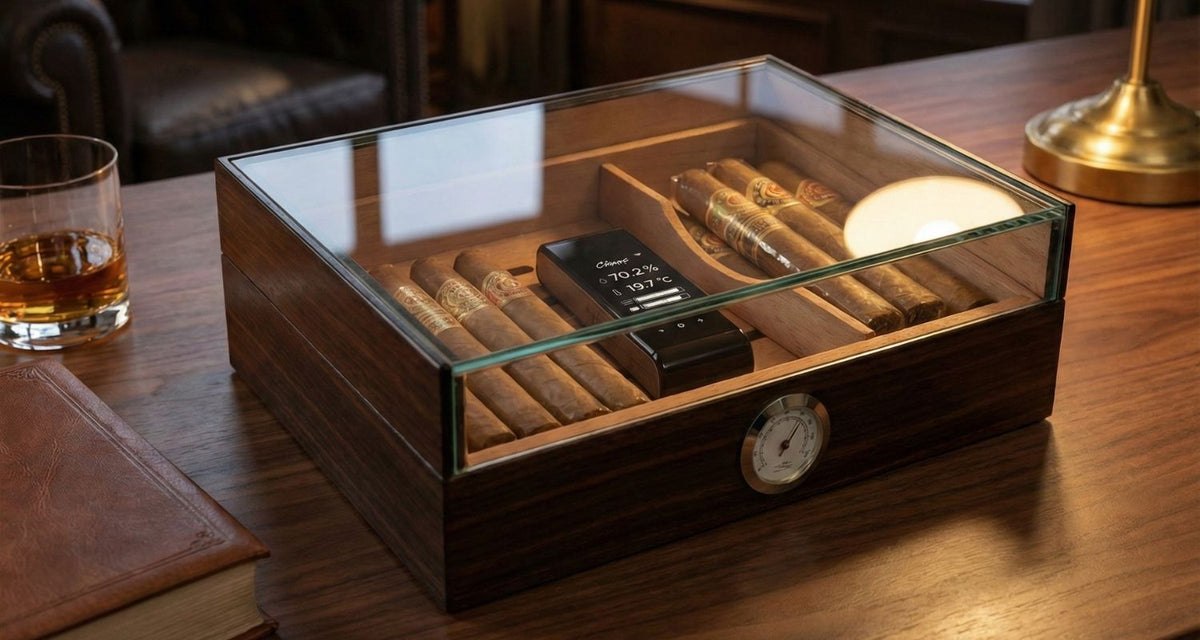
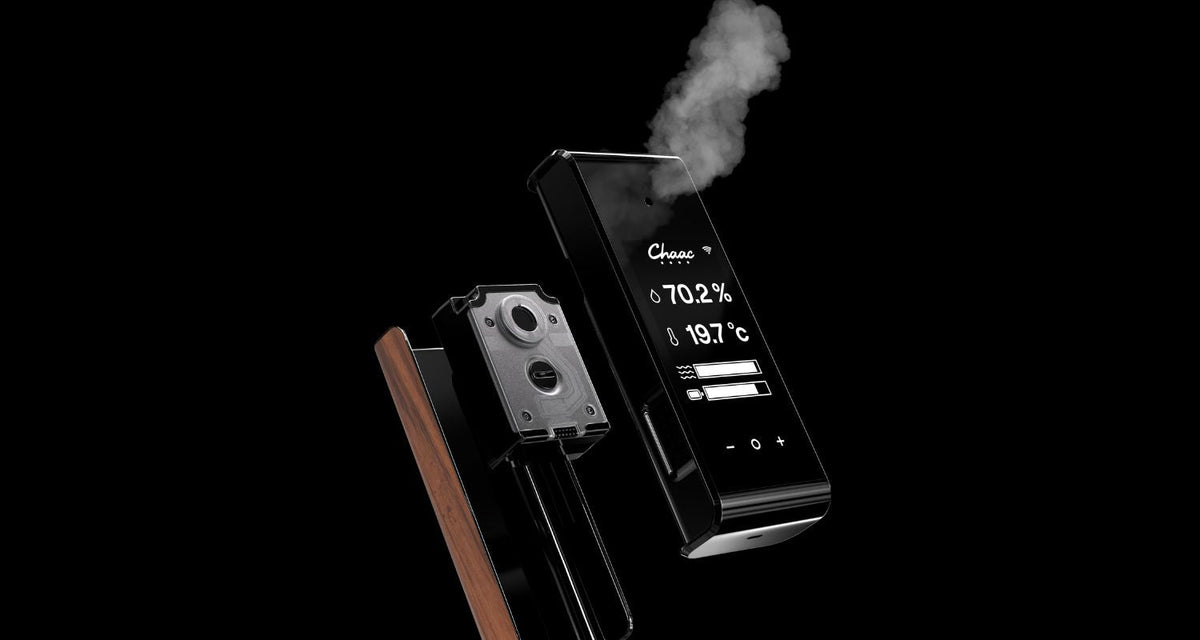
Chaac’s Patuca cigar humidifiers automatically monitor and regulate humidity while providing audible alerts when humidity, water, or battery levels require attention. Patuca is designed for precise, low-maintenance protection without unnecessary complexity.
For connected collection management, Chaac’s Grande cigar humidifiers provide remote monitoring and control through the Chaac app. You can track humidity, temperature, battery status, and water levels, receive smart alerts, and review environmental trends from your smartphone.
The objective is not simply to generate moisture. It is to create a stable, measurable environment that protects the collection with minimal interruption.
Humidity and Long-Term Cigar Aging
Stable storage becomes even more important when aging premium cigars. Over time, the filler, binder, and wrapper leaves may continue to integrate, allowing aromas and flavors to become more balanced.
However, aging is not created by time alone. It depends on maintaining appropriate temperature, humidity, ventilation, and storage hygiene. Official guidance recommends steady conditions because moisture loss can cause aromas to fade, while excessive humidity can interfere with proper preservation.
Understanding how long cigars stay stored also helps determine the level of monitoring required. A cigar held for a few weeks may tolerate small temporary fluctuations better than a rare box intended to remain untouched for years.
Long-term storage benefits from:
- Consistent RH rather than frequent adjustments
- Reliable temperature monitoring
- Proper spacing between boxes
- Calibrated sensors
- Historical data that reveals gradual changes
- A maintenance schedule for water and power
Should You Open Your Humidor Frequently?
There is nothing inherently wrong with opening your humidor every day, especially when you regularly select cigars from your collection. However, each opening exchanges conditioned air with the surrounding room.
The RH may temporarily drop or rise depending on your indoor environment. This does not always indicate a problem. A properly sized humidification system should gradually restore the target conditions after the lid or door is closed.
Avoid responding to every temporary change by adding water or adjusting the set point. Monitor how quickly the humidor recovers and look for repeated patterns over several days.
Protect Every Cigar Through Consistent Control
Relative humidity directly influences how a cigar feels, draws, burns, and develops in storage. The goal is not to pursue one universal number but to establish a stable environment within an appropriate range.
At Chaac, we believe premium cigar care should combine tradition with intelligent precision. Monitor humidity and temperature together, allow air to circulate, avoid aggressive adjustments, and choose a humidification system that matches the scale and value of your collection.
For more practical guidance, explore our resources on optimal humidity for cigars and build a storage approach that keeps every cigar prepared for the moment you choose to enjoy it.
Frequently Asked Questions
1. What is the best humidity for humidor storage?
A range of approximately 65% to 70% RH is widely recommended, but your preferred cigar texture, burn, climate, and humidor design should guide the final setting.
2. Is 70% humidity too high for cigars?
Not necessarily. However, 70% provides less margin if humidity or temperature rises, so accurate monitoring and good airflow become more important.
3. How often should I check humidor humidity?
Check conditions regularly, but focus on trends rather than individual readings. Smart monitoring can make this easier by identifying gradual changes and sending alerts when attention is required.
4. Why does my humidor humidity change overnight?
Temperature changes, room conditions, an imperfect seal, recent openings, or newly added cigars can all influence the reading.
5. Can dry cigars be restored?
Some dry cigars can be reconditioned through gradual humidification. Severe or prolonged dryness may cause permanent flavor loss, so recovery should be slow and carefully monitored.