
Can Cigars Be Too Humid? Signs of Over-Humidification
Proper humidity is essential to preserving the structure, burn, and flavor of premium cigars, but more moisture is not always better. Can cigars be too humid? Absolutely. When tobacco absorbs excessive moisture, cigars can become swollen or soft, develop a tight draw, burn unevenly, require frequent relighting, and become more susceptible to mold.
Recognizing the signs of over-humidified cigars early can help prevent minor cigar humidity problems from affecting an entire collection. In this guide, we explain what causes too much humidity in a humidor, how to identify excess moisture, how to correct the problem safely, and how to maintain stable conditions over time.
What Happens If Cigars Get Too Humid?
For most premium cigar storage, the commonly used ideal humidity for cigars is about 65% to 72% relative humidity (RH), with roughly 69% to 70% serving as a practical everyday target. Sustained humidity above the low 70s increases the likelihood of tight draws, poor combustion, and mold, especially when the environment is also warm.
The bigger concern is prolonged high-humidity cigar storage, where tobacco continuously absorbs excess moisture. The effects of high humidity on cigars can include swelling, restricted airflow, repeated relighting, uneven burning, and muted flavor. Temperature matters as well, so it is worth understanding how temperature affects cigar aging and flavor when building stable cigar storage humidity levels.
Our guide to optimal humidity for cigars explains the standard range in more detail, while reviewing which humidity level is best can help you think through different storage preferences.
How to Tell If a Cigar Is Over-Humidified
Knowing how to tell if a cigar is over-humidified means looking at several signals together rather than relying on one symptom.
- Soft or Swollen Feel
A properly conditioned cigar should have some give, but it should not feel wet, heavy, or excessively spongy.
- Tight Draw
If you are wondering why your cigars are hard to smoke, excess moisture may be one cause. Tobacco expands as it takes on moisture, which can restrict airflow.
- Difficulty Staying Lit
A cigar that repeatedly goes out, requires frequent touch-ups, or burns inconsistently may be holding too much moisture. If you are asking why your cigar is not burning properly, checking RH is a useful first step.
- Dull, Bitter, or Harsh Flavor
If you are wondering why cigars taste bitter or harsh, poor combustion from excess moisture can be one factor. Flavor alone is not a humidity test, but it becomes more meaningful alongside a tight draw and poor burn.
- Mold or a Musty Smell
Persistent excessive humidity can increase mold risk. Isolate any suspicious cigar while you determine the cause.
Over-humidified cigars often feel unusually soft or swollen, draw tightly, require frequent relighting, and burn unevenly.
Why Does Humidity Get Too High in a Humidor?
Excess humidity commonly comes from adding too much water, using more humidification than the humidor requires, relying on an inaccurate hygrometer, or exposing the humidor to a more humid room environment. A newly conditioned wooden humidor can also run high, while blocked airflow in larger setups may create wetter zones.

Seasonal conditions matter too. Understanding how weather changes affect cigar humidor conditions makes it easier to spot patterns before they become persistent problems.
Small habits also affect stability. Our guide to cigar storage mistakes covers avoidable causes of humidity drift, while the question of opening the humidor every day is worth considering when frequent air exchange is producing repeated swings.
How to Fix Over-Humidified Cigars
The goal is not to dry cigars as quickly as possible. Sudden changes can create a new imbalance. When considering how to fix over-humidified cigars, gradual correction is safer.
1. Verify the Reading
Check your hygrometer before changing anything. If possible, compare it with another reliable reading.
2. Reduce the Excess Moisture Source
If a humidifier was recently overfilled or too many humidity sources were added, reduce or temporarily remove the source and monitor the RH.
3. Separate Severely Affected Cigars
A noticeably wet cigar can be moved temporarily to a clean, suitable environment where moisture can dissipate gradually. Avoid direct heat, sunlight, refrigeration, or aggressive drying.
4. Allow the Humidor to Stabilize
Once the cigar humidor humidity returns to the preferred range, give the cigars time to reach equilibrium before judging draw or burn.
How long does it take to dry out an over-humidified cigar? There is no universal timetable. Mild excess moisture may resolve relatively quickly once storage is corrected, while heavily saturated cigars can take longer. Stable RH, normal firmness, and improved smoking performance are better indicators than a fixed number of days.
If correction goes too far, recovering over-dried cigars should also be gradual. Comparing automatic versus manual cigar humidifiers can help reduce repeated overcorrection.
How to Maintain Proper Humidity in a Humidor
Good cigar humidity control is built around stability, accurate monitoring, and a humidification system that matches the humidor.
Keep these cigar preservation tips in mind:
- Maintain a consistent target instead of reacting to every small RH movement.
- Monitor temperature together with humidity.
- Avoid overfilling reservoirs or adding extra moisture just in case.
- Place sensors where they represent the actual cigar storage environment.
- Leave enough space for airflow instead of packing the humidor too tightly.
For long-term collections, air circulation improves cigar preservation by helping reduce stagnant pockets and uneven moisture. Stable conditions become increasingly important when aging premium cigars or considering how long cigars stay stored. Our guide explaining why relative humidity matters for premium cigars provides additional context on why consistency matters.
If you are evaluating a different setup, our guide on how to choose the right cigar humidor can help match humidification capacity and maintenance needs to the collection.
Smarter Monitoring Can Help Prevent Humidity Problems
One of the easiest ways to avoid cigar moisture problems is to identify humidity drift before cigars begin showing physical symptoms.

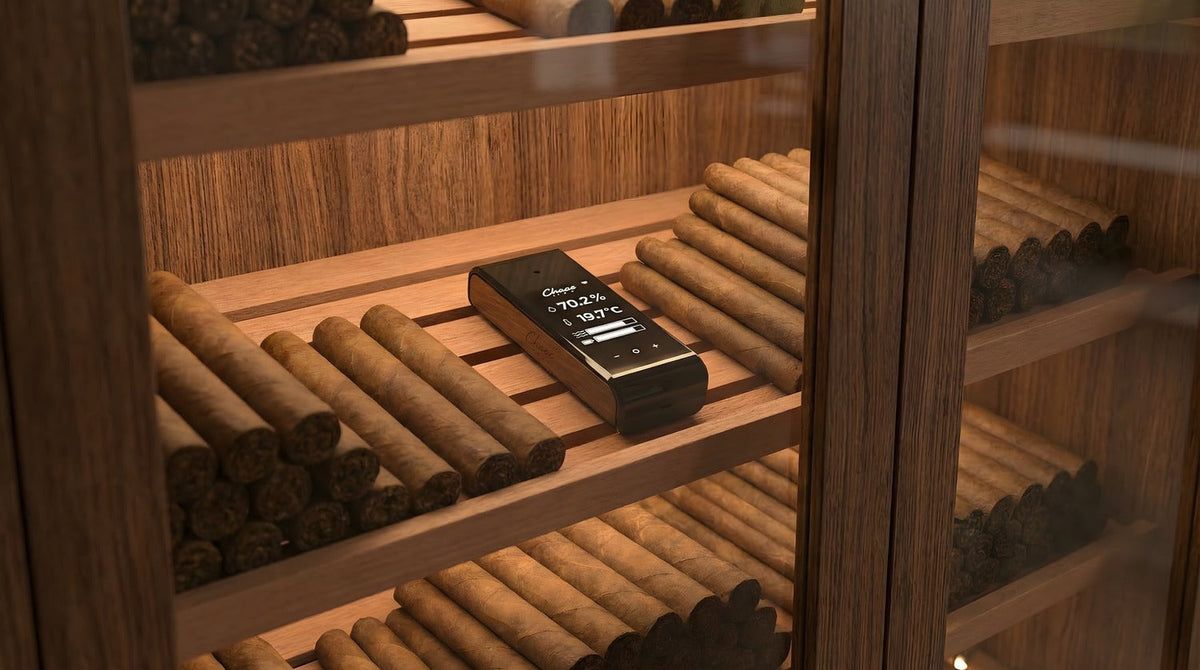
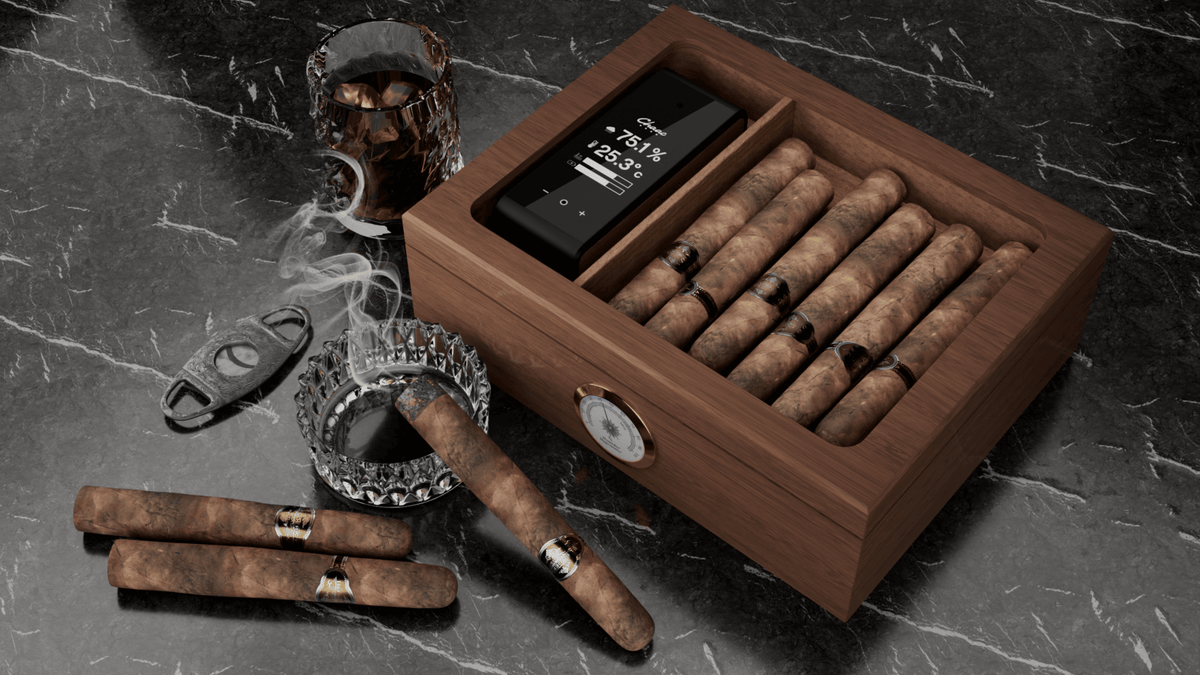
Our connected cigar humidifiers are built around active humidity management and remote monitoring. Through our app, you can view current humidity and temperature, track water and battery status, adjust humidity, and receive alerts when conditions move outside the selected range.
For connected control with a streamlined feature set, Chaac Patuca cigar humidifiers provide automated regulation and environmental monitoring. For more advanced collection management, Chaac Grande cigar humidifiers add expanded app capabilities, including historical information and multiple-device management.
The purpose of smart monitoring is not to make you check the humidor more often. It is to make stable conditions easier to maintain with less guesswork.
Keep Humidity Stable, Not Simply High
Proper cigar preservation is not about adding as much moisture as possible. It is about keeping moisture within a stable, appropriate range.
If cigars feel swollen, draw tightly, burn poorly, or show other signs of over-humidified cigars, verify the reading, correct the moisture source gradually, and give the tobacco time to rebalance.
With reliable monitoring and a well-matched humidification system, learning how to maintain proper humidity in a humidor becomes less reactive, and your cigars are more likely to perform as intended when you are ready to enjoy them.
Frequently Asked Questions
1. Can high humidity ruin cigars?
Yes. Whether high humidity ruins cigars depends largely on how high the RH rises and how long exposure continues. Prolonged excess moisture can impair burn and draw and increase mold risk.
2. What humidity level is too high for cigars?
For most storage setups, sustained RH above roughly 72% should be treated as a warning sign. A brief spike is different from a humidor that remains above the preferred range day after day.
3. Can an over-humidified cigar be saved?
Often, yes, especially when the issue is identified before mold or serious physical damage develops. Restore the environment gradually and allow the cigar to acclimate.
4. Should I smoke a cigar that feels very wet?
It is usually better to let it rebalance first. A wet cigar is more likely to draw poorly, require relighting, and burn unevenly.
5. How can I prevent over-humidification from returning?
Use accurate monitoring, avoid oversized or overfilled moisture sources, watch seasonal trends, and make adjustments only when RH shows a persistent change.