
How Temperature Affects Cigar Aging and Flavor
A premium cigar continues to change after it is rolled, and temperature helps determine how quickly that change happens. Too much heat can push maturation too quickly, while cooler conditions slow development. Repeated swings can also disrupt the balance between temperature, moisture, and relative humidity.
That is why temperature for cigar storage deserves the same attention as humidity. If you are building a collection for long-term enjoyment, the goal is to create a stable cigar storage environment that supports gradual maturation, protects construction, and allows flavor to develop over time.
Why Temperature Matters During Cigar Aging
Aging is not passive storage. After rolling, cigars continue to undergo chemical and microbial changes that can reduce harshness and bring a blend into greater balance. Temperature, relative humidity, time, aging media, and oxygen availability are important factors in this process. Controlled cigar-aging studies commonly use conditions around 20°C, or 68°F, although appropriate conditions vary.
This is the foundation of temperature and cigar aging: temperature influences the pace of change. A stable environment supports slow, controlled development rather than forcing the process.
Our guide to why relative humidity matters for premium cigars explains why moisture should be considered alongside temperature.
What Is the Best Temperature to Store Cigars?
There is no single number that fits every cigar, humidor, climate, and aging goal. For general home storage, a steady range around 65-70°F is a practical target, and established storage guidance commonly places a maintained humidor around 68-70°F. Controlled cigar-aging research also frequently works near 68°F.
For longer-term aging, some collectors prefer slightly cooler conditions to slow maturation. Successful aging can occur at lower temperatures when humidity remains controlled.

A useful way to think about cigar aging temperature is:
- About 65-70°F: A practical range for everyday storage and gradual aging.
- Low-to-Mid 60s°F: Often used for slower, longer-term aging with carefully controlled relative humidity (RH).
- Above the Low 70s°F for Extended Periods: Better avoided, especially when humidity is also elevated.
The key is consistency. The ideal humidor temperature is a moderate temperature you can maintain without repeated swings.
How Higher Temperatures Affect Cigar Flavor
Warm storage can accelerate reactions involved in the cigar maturation process, but faster is not necessarily better. Research on aging conditions has found that excessively high temperatures can speed maturation and contribute to the loss of mellow character and flavor. Temperature also influences volatile compounds associated with aroma and cigar flavor development.
Higher temperatures can also make storage harder to manage when moisture is excessive. Our overview of common cigar storage mistakes explains why direct sunlight, heat sources, HVAC vents, and unstable rooms can undermine a well-maintained humidor.
If conditions become too wet, recognizing the signs of cigar over-humidification can help you respond before draw, burn, or wrapper condition deteriorates.
What Happens When Cigars Are Stored Too Cool?
Cooler conditions generally slow aging rather than stopping it. For collectors preserving cigars for years, slower development may be desirable. Very cold storage, however, is not automatically better.
If you are learning how to age cigars properly, focus on a moderate, repeatable temperature and make environmental changes gradually. The same approach matters when recovering over-dried cigars: slow correction is preferable to abrupt shifts.
Temperature and Humidity Must Be Managed Together
Temperature and relative humidity (RH) are physically linked. RH measures moisture in the air relative to what the air could hold at that temperature. As temperature changes, the RH reading can change even when total moisture has not.
That is why RH may move as room temperature changes. Rather than reacting to every small reading, track trends and aim for stable temperature and humidity.
Our guide to optimal humidity for cigars places typical storage around 65-72% RH and emphasizes stable conditions rather than constant adjustment. You can also compare automatic vs. manual cigar humidifiers when deciding how much hands-on monitoring your collection should require.
How to Create Better Cigar Aging Conditions
Good cigar preservation methods are built around repeatability. Whether you are aging premium cigars in a few boxes or maintaining a larger collection:
- Keep the humidor away from windows, radiators, direct sunlight, and strong HVAC airflow.
- Monitor both cigar humidor temperature and RH rather than treating humidity as the only meaningful reading.
- Avoid opening your humidor every day simply to check conditions; frequent opening introduces outside air and makes the environment recover.
- Leave enough space for airflow. Understanding how air circulation improves cigar preservation is especially useful in larger cabinets where tightly packed cigars can create uneven microclimates.
- Make changes gradually. If temperature or humidity drifts, correct the underlying cause instead of making large, repeated adjustments.
- Match the humidification system to the humidor’s size, seal quality, and your preferred level of involvement.
If you are evaluating cigar humidifiers, focus on systems that maintain consistent humidity while giving you dependable information about the environment. Our guide on how to choose the right cigar humidor can also help you compare storage needs and humidification options.
Use Temperature Data to Protect Long-Term Flavor
Temperature monitoring becomes especially valuable when you travel, heating and cooling vary, or weather changes affect your cigar humidor.

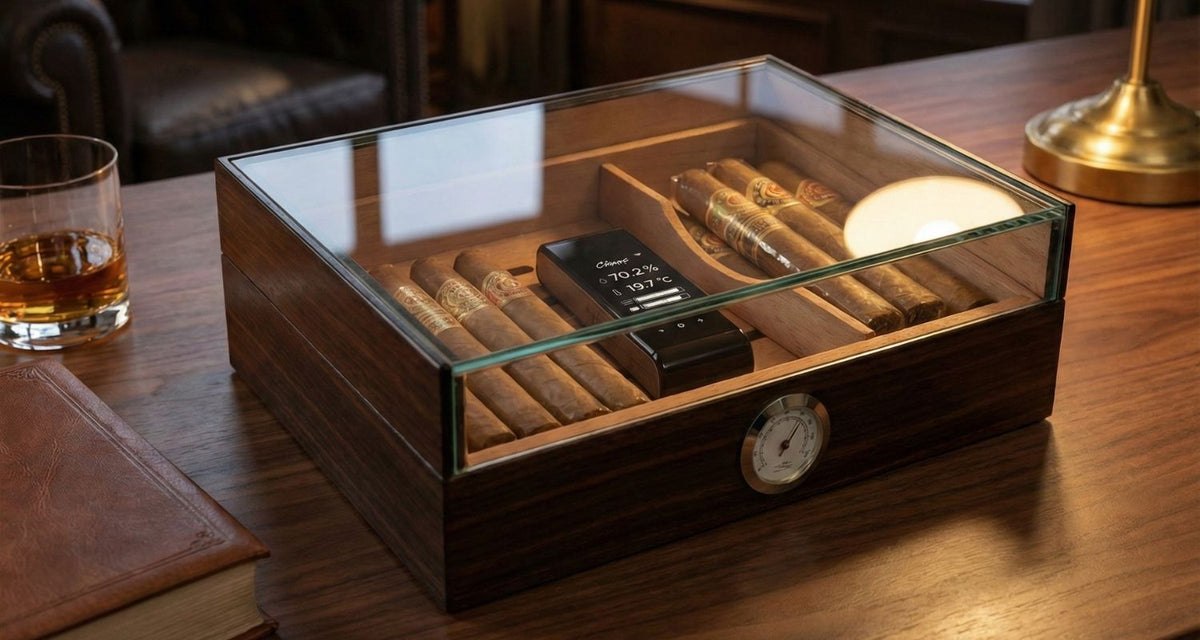
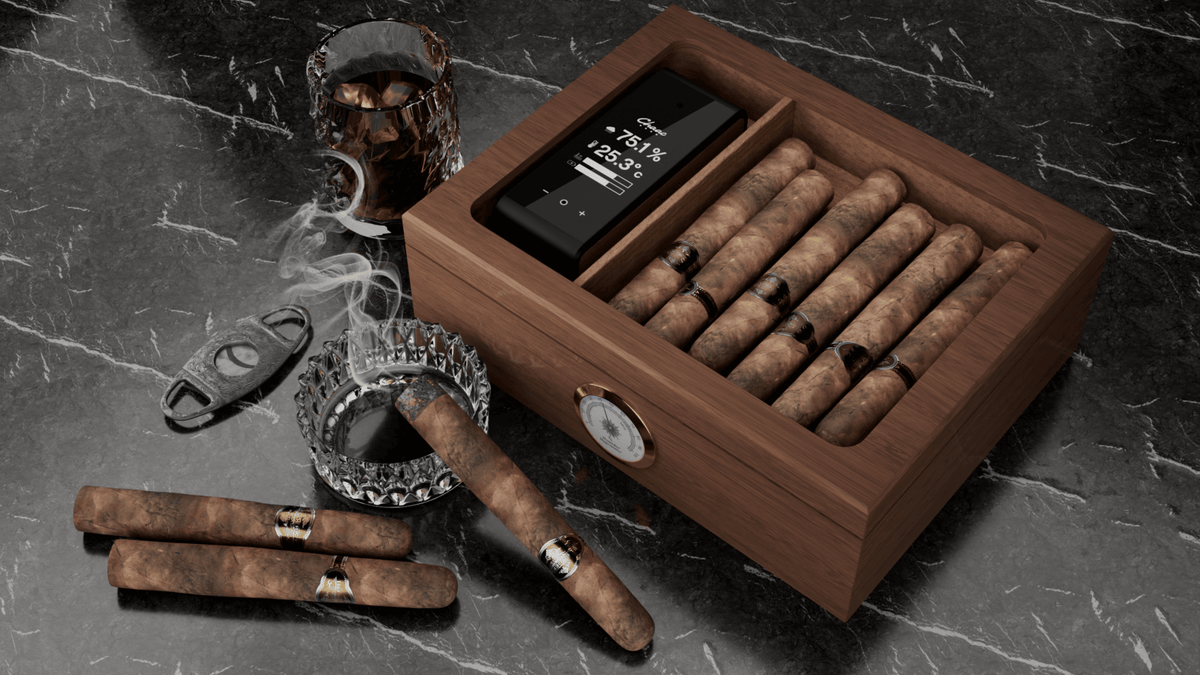
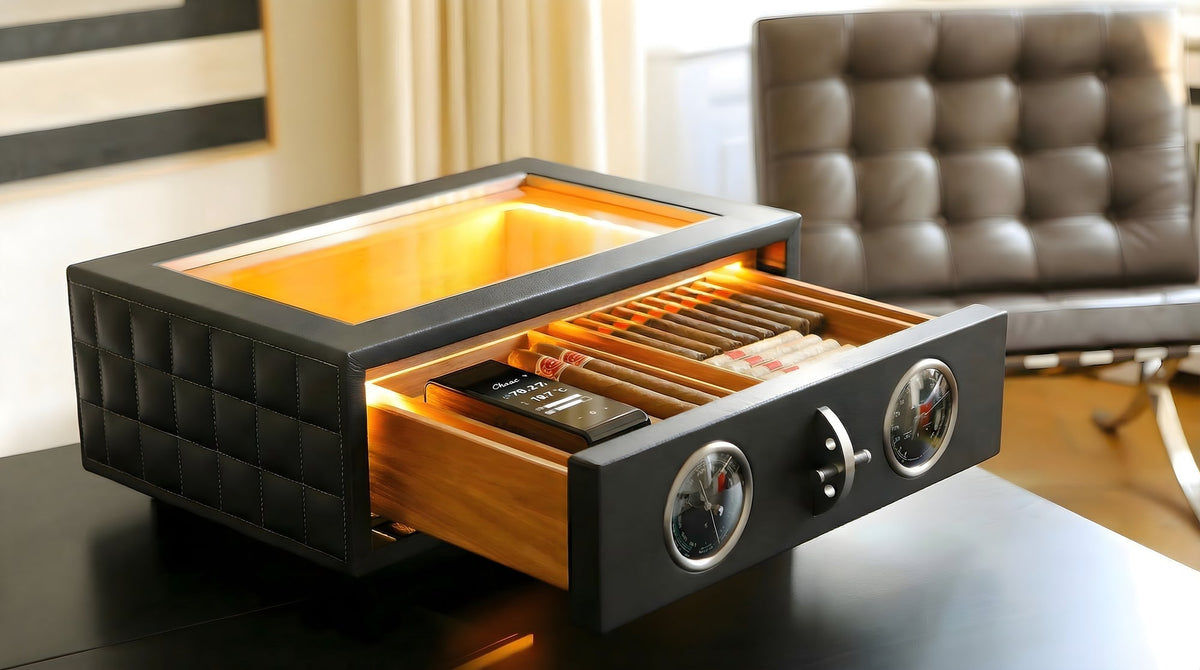
Chaac Grande cigar humidifiers provide remote access to humidor data through the CHAAC app, including temperature, humidity, battery level, and water level, along with alerts and advanced analytics for ongoing monitoring.
For collectors who prefer a simpler automated humidity system with device-level alerts, Chaac Patuca cigar humidifiers automatically monitor and regulate humidity and provide audible notifications when water, battery, or humidity requires attention.
These tools do not replace thoughtful humidor placement or room-temperature control. They make changes easier to identify before they undermine long-term stability.
Protect the Environment, and Let Flavor Develop Naturally
The best temperature to store cigars is a stable one that supports the humidity level, aging pace, and collection you want to maintain. For most home humidors, moderate temperatures in the mid-to-upper 60s°F provide a strong starting point. More important than a single number is avoiding prolonged heat and repeated environmental swings.
When temperature and humidity stay consistent, maintaining cigar quality becomes more predictable. Build the right environment, monitor it carefully, and allow time to do the rest. If you want greater visibility and more consistent humidity management, explore our smart humidification options and choose the level of control that fits your collection.
Frequently Asked Questions
1. What is the ideal temperature for cigar aging?
For most home collections, approximately 65-70°F is a practical ideal temperature for cigar aging, with some long-term approaches favoring slightly cooler conditions. Stability matters more than chasing one exact number.
2. Does temperature change how a cigar tastes?
Yes. How temperature affects cigar flavor is tied to the pace of maturation and the stability of aromatic compounds. Excessive heat can accelerate aging and alter flavor development, while cooler conditions generally slow the process.
3. Should cigar temperature and humidity be adjusted together?
They should be evaluated together because RH changes with temperature. Before changing your humidification setting, look at the temperature trend and consider whether the RH movement is temporary. Our guide to which humidity level is best provides more context for balancing storage conditions.
4. How long can cigars age in a humidor?
There is no universal aging period. Depending on the blend, storage conditions, and your flavor preference, cigars may continue to change over months or years. Understanding how long cigars stay stored is less about reaching a deadline and more about maintaining stable conditions and periodically evaluating development. Aging time and environmental conditions both influence cigar sensory characteristics.