
The Science Behind Aging Premium Cigars
A premium cigar can continue to change long after it has been rolled. Under controlled storage conditions, compounds within the tobacco evolve over time, changing the cigar’s aroma and potentially the way its flavors are perceived.
That does not mean every cigar improves simply because it gets older. Cigars have already gone through curing, fermentation, tobacco aging, and often additional resting after rolling before they reach the collector. Home cigar aging, often called box aging, is an additional stage, and its results depend on the cigar itself, how long it is stored, and the conditions surrounding it.
So what actually happens during the cigar aging process, and how can collectors create conditions that support it?
What Actually Happens When a Cigar Ages?
A finished cigar contains a complex mixture of chemical compounds, including many that contribute to its aroma. These compounds do not necessarily remain unchanged during storage.
A recent controlled study followed cigars made from one fixed blend over 18 months. Researchers stored them in Spanish cedar cabinets at 60% ± 2% RH and 20°C ± 2°C, then analyzed samples at several points during the aging period. They identified 1,836 volatile compounds and found clear changes in the volatile profile as aging progressed.
Terpenoids, esters, ketones, and heterocyclic compounds were among the major groups identified. In this particular experiment, terpenoids increased substantially, while the researchers also observed changes in compounds associated with different aroma characteristics.
This provides scientific evidence that chemical changes during cigar aging can occur. However, the study examined a specific cigar formulation under specific controlled conditions. Its exact results should not be treated as a prediction of how every premium cigar will develop.
The useful takeaway is simpler: aging is not merely a cigar sitting untouched for a certain number of years. Its chemical and aromatic profile can continue to evolve.
How Does Aging Affect Cigar Flavor?
Changes in aroma-active compounds can alter how a cigar presents itself when smoked.
In the 18-month study, compounds associated with fruity, floral, honey, woody, and sweet aromas became more prominent, while those associated with coffee, roasted, hay, burnt, and spicy aromas declined. Again, those results describe the cigars tested, not a universal progression that every cigar follows.
In practice, collectors often describe aged cigars as softer, rounder, or more integrated than younger examples of the same cigar. However, some of the strength or distinct character that made a younger cigar appealing can also diminish with extended aging.
That distinction is important when asking how aging affects cigar flavor. Aging does not simply add flavor. It changes the balance of what is already there.
Does Aging Improve Every Premium Cigar?
No, premium cigar aging should not be treated as a guaranteed upgrade.
Cigarmakers already age tobacco before rolling, often for years, and many also rest finished cigars before releasing them. As a result, a premium cigar can already be ready to smoke when you buy it. Additional aging at home is optional.
Some cigars may become more enjoyable to you after further aging. Others may simply become different, while prolonged aging can eventually reduce characteristics you preferred when the cigar was younger. Reports from experienced collectors describe very old cigars losing flavor and character after passing their preferred stage of development.

One practical way to find out is to buy several cigars from the same box or batch. Smoke one relatively young, record your impressions, and revisit the others periodically. This gives you a personal reference for the difference between aged and fresh cigars instead of relying on a universal timeline.
How Long Should You Age Premium Cigars?
There is no scientifically established number of months or years that applies to every cigar.
The controlled study discussed above detected measurable changes across 18 months, but that does not mean 18 months is the ideal aging period. It demonstrates that the volatile composition of the tested cigars changed during that period.
Collectors sometimes age selected cigars for several years, while others prefer them after a much shorter rest. The cigar's blend, existing age, storage history, and your own taste all influence when it reaches the point you enjoy most.
Instead of asking only how long it takes to age a cigar, consider periodically sampling cigars from the same box. If the cigar is developing in a direction you enjoy, continue aging the remaining cigars. If you prefer its current profile, there is little reason to wait simply for the sake of accumulating more years.
Time is a variable in cigar aging, not a guarantee of quality.
How to Store Cigars for Long-Term Aging
Learning how to properly age cigars is largely about creating a controlled environment and then keeping it consistent.
For everyday cigar storage, approximately 65–70% RH and 65–70°F are commonly recommended ranges. Some experienced collectors deliberately use cooler and somewhat drier conditions for long-term aging, such as humidity in the low-to-mid 60s and temperatures in the low-to-mid 60s°F. These lower ranges reflect collector practices rather than one scientifically proven setting that is best for every cigar.
That is why there is no universal best humidity for aging cigars or best temperature for aging cigars.
For most home collectors, the priorities are to avoid prolonged extremes and large fluctuations, maintain an effective humidor seal, provide appropriate humidification, and monitor both RH and temperature.
Our guides to optimal humidity for cigars and which humidity level is best provide more detail on choosing an RH setting. You can also read how temperature affects cigar aging and flavor to understand why temperature should be considered alongside humidity.
Seasonal conditions matter too. Winter heating, summer humidity, and air conditioning can all change the environment surrounding your collection. Our guide to how weather changes affect your cigar humidor explains how to respond without constantly adjusting your storage conditions.
Common Cigar Aging Mistakes
Years of storage will not benefit a cigar if the environment is poorly controlled.
One mistake is assuming that extra humidity is safer for cigars intended for long-term storage. Excessive humidity can cause swollen tobacco, tight draws, and combustion problems, and increase the risk of mold in unsuitable conditions. Learn more about maintaining proper cigar humidity levels and recognizing the signs of excess moisture.
The opposite extreme is equally undesirable. Cigars allowed to become severely dry can develop brittle wrappers and suffer changes that careful rehydration may not fully reverse. If this has already happened, recovering over-dried cigars should be gradual.
Poor seals, unreliable monitoring, inadequate humidification, and large environmental swings are other cigar storage mistakes that can undermine a long-term collection.
For larger humidors, distribution also matters. Good air circulation improves cigar preservation by helping conditioned air reach different parts of the collection rather than allowing persistent differences between areas.
Greater Control for Long-Term Cigar Storage
Long-term aging creates a simple challenge: you want to leave your collection relatively undisturbed while still knowing that its environment remains stable.
A hygrometer tells you the conditions at the moment you check it. Longer-term monitoring can add context by showing whether conditions have remained consistent or gradually changed.
CHAAC is designed as a complete humidification system for an existing humidor. Its sensors monitor conditions while the system actively regulates humidity according to the selected setting. Collectors looking for automated humidity management can explore CHAAC cigar humidifiers.
CHAAC Patuca cigar humidifiers provide automated humidity regulation with on-device monitoring and audible alerts for humidity, water, and battery conditions.
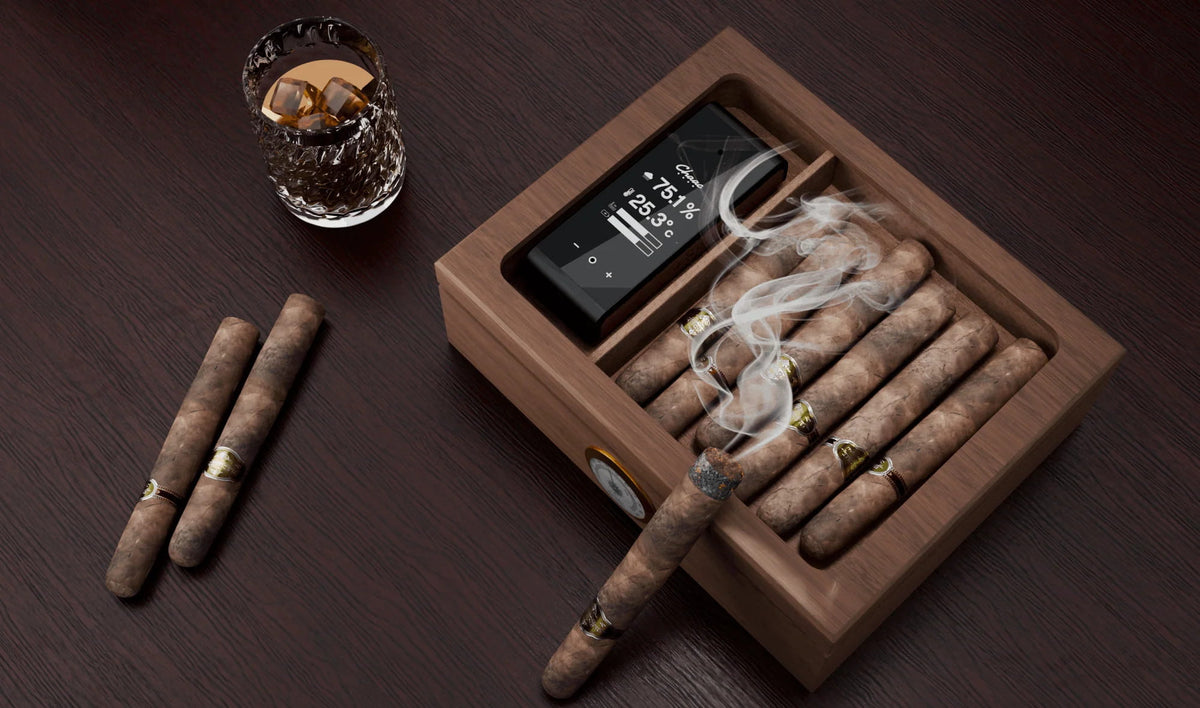
For collectors looking for greater visibility, CHAAC Grande cigar humidifiers are designed to add connected monitoring and control, including humidity, temperature, battery, and water-level information.
Our comparison of automatic vs. manual cigar humidifiers explains how the two approaches differ when managing a collection over time.
For aging premium cigars, the benefit is not speeding up maturation. It is maintaining greater control over one of the factors that determines how well cigars are preserved while they age.
Aging is About Development, Not Simply Time
The science behind cigar aging confirms that a cigar's volatile composition can continue to change during controlled storage. What science does not provide is a universal formula stating that a particular cigar will taste best after a specific number of years.
That is part of what makes cigar aging interesting.
Store cigars under appropriate, stable conditions and taste them periodically. Over time, you can learn how a particular blend develops and, more importantly, when you prefer to smoke it.
The objective is not to own the oldest cigar possible. It is to enjoy the cigar at the stage that suits your taste.
Frequently Asked Questions
1. Does aging improve cigars?
It can, but not every cigar improves according to every smoker's preferences. Aging can change a cigar's aromatic and sensory profile, while very long aging can eventually reduce characteristics that some smokers enjoy.
2. How long should you age premium cigars?
There is no universal aging period. Changes can occur over months, while some collectors keep selected cigars for years. Sampling cigars from the same box periodically is a practical way to determine when you prefer them.
3. What humidity and temperature are best for aging cigars?
There is no single scientifically established combination for all premium cigars. Approximately 65–70% RH and 65–70°F are commonly cited for everyday storage, while some experienced long-term collectors use somewhat cooler and drier conditions. Avoiding damaging extremes and maintaining stable conditions are key considerations.
4. Can you age cigars for too long?
Yes. More time does not guarantee continued improvement. Some cigars can eventually become muted or lose desirable character, which is why periodically tasting cigars from an aging collection can be useful.
5. Should cigars stay in their original box while aging?
They can. Collectors commonly age cigars in their original boxes inside a properly controlled humidified environment. Keeping a box together also makes it easier to track its age and periodically compare how its cigars are developing.